
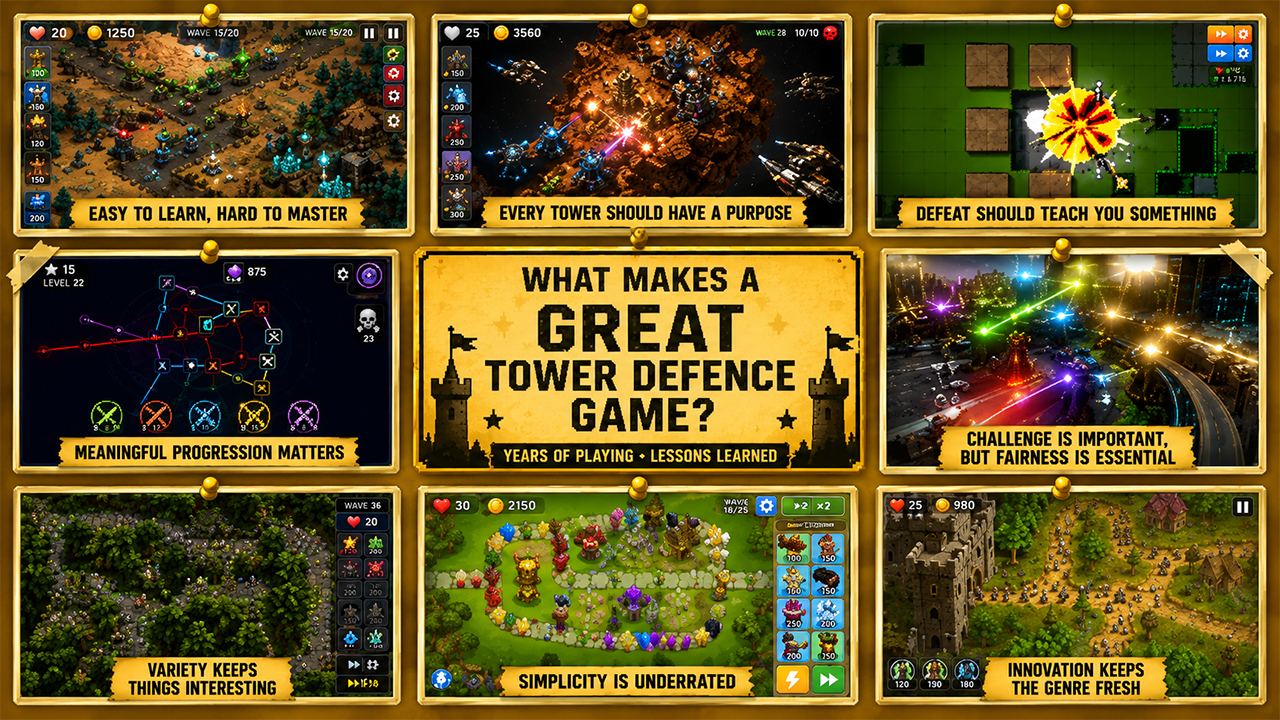
Over the years I've played dozens of tower defence games. Some have been huge successes within the genre, while others have been hidden indie gems that very few people seem to know about. Yet despite all of those games being technically part of the same genre, not all tower defence games are created equal.
Some keep me coming back for years. Others are forgotten within a few days. That got me thinking. What actually makes a great tower defence game?
## Easy To Learn, Difficult To Master
The first thing a great tower defence game needs is accessibility. I don't want to spend half an hour reading tutorials before placing my first tower. The best games introduce their mechanics gradually, allowing players to learn naturally while they play.
Rainbow Tower Defence is a recent example of this. The game introduces its unique linking mechanics in a clear and understandable way before gradually increasing the challenge. By the time the difficulty ramps up, you already understand the foundations.
Kingdom Rush has always done this exceptionally well too. The basics are simple enough that almost anybody can understand them, yet the deeper you go, the more strategic options reveal themselves.
To me, that's one of the signs of good design. A new player can enjoy the game within minutes, while experienced players still have plenty to master.
## Every Tower Should Have A Purpose
One of the quickest ways for a tower defence game to lose my interest is when I discover there is only one correct strategy.
The best tower defence games make every tower feel useful. Element TD 2 is one of my favourite examples of this. Different elements and combinations encourage experimentation, and there are often multiple ways to solve the same problem. Success comes from understanding the strengths of your choices rather than simply copying one perfect build.
GemCraft is another game that does this incredibly well. Over countless hours of gameplay, I found myself constantly adjusting strategies, experimenting with gem combinations and adapting to different situations. The game rewards creativity rather than punishing it.
## Defeat Should Teach You Something
I don't mind losing. In fact, some of my favourite tower defence games have beaten me repeatedly. The important thing is understanding why I lost.
Kingdom Rush often achieves this perfectly. If I fail a level, it's usually because I made poor decisions. Perhaps I upgraded the wrong tower. Perhaps I focused too heavily on one lane. Perhaps I underestimated a particular enemy type.
Whatever the reason, I can usually identify what went wrong. That means failure becomes useful. A bad tower defence game leaves you frustrated. A good tower defence game leaves you determined to try again. There's a huge difference between those two feelings.
## Meaningful Progression Matters
One reason I've always enjoyed games like Colony Defense and Tower Factory is the constant sense of progression. Both games understand something very important about player motivation. People enjoy improving. Unlocking a new upgrade. Discovering a new strategy. Increasing efficiency. Finding a better solution. Even small amounts of progress can feel rewarding when they're earned. Progression systems don't need to be complicated. They simply need to make players feel that their time is respected.
Some of my favourite gaming sessions have ended with very little visible progress, but a much better understanding of the game itself. That still counts as progress.
No matter how good the core mechanics are, repetition eventually becomes a problem. Great tower defence games constantly introduce new situations. Different enemy types. Different maps. Different tower combinations. Different objectives.
Element TD 2 excels here because no two matches ever feel exactly the same. The combination of random elements and player choices creates a huge amount of variety.
Similarly, games like Defence Grid 2 continually force players to rethink their strategies by presenting new challenges and enemy behaviours.
The moment a tower defence game becomes predictable, it starts losing its magic.
## Challenge Is Important, But Fairness Is Essential
Difficulty alone doesn't make a game good. A game can be brutally difficult and still be enjoyable if the challenge feels fair.
Rainbow Tower Defence is a great recent example. The developer openly describes it as a difficult game, and after playing it myself I'd certainly agree. However, the challenge comes from the mechanics and decision-making rather than from hidden information or unfair surprises.
When I lose, I know it was because I made mistakes. That's important. Players are often willing to accept failure. They're far less willing to accept feeling cheated.
## Simplicity Is Underrated
Not every tower defence game needs fifty systems layered on top of each other. Desktop Defender is one of the best examples I can think of. It's simple. Straightforward. Easy to understand. And fun.
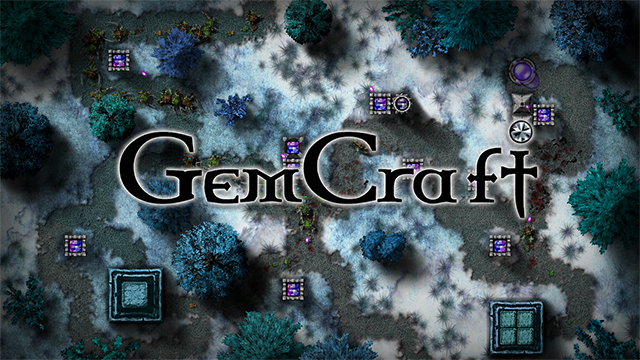
Why Has Gemcraft Remained So Well Played After All This Time?
💎 GemCraft has been captivating Tower Defence fans since 2008. Discover why its unique gameplay, clever progression and timeless design still keep me coming back after all these years.
## Innovation Keeps The Genre Fresh
One reason I continue to cover indie tower defence games is because they're willing to experiment. Some combine tower defence with roguelite mechanics. Others introduce incremental progression. Some blend city building and survival elements.
Rise to Ruins remains one of the most interesting examples I've played. While it isn't a traditional tower defence game, its defensive systems become a crucial part of surviving and growing your settlement. Watching multiple genres blend together creates experiences that feel genuinely different.
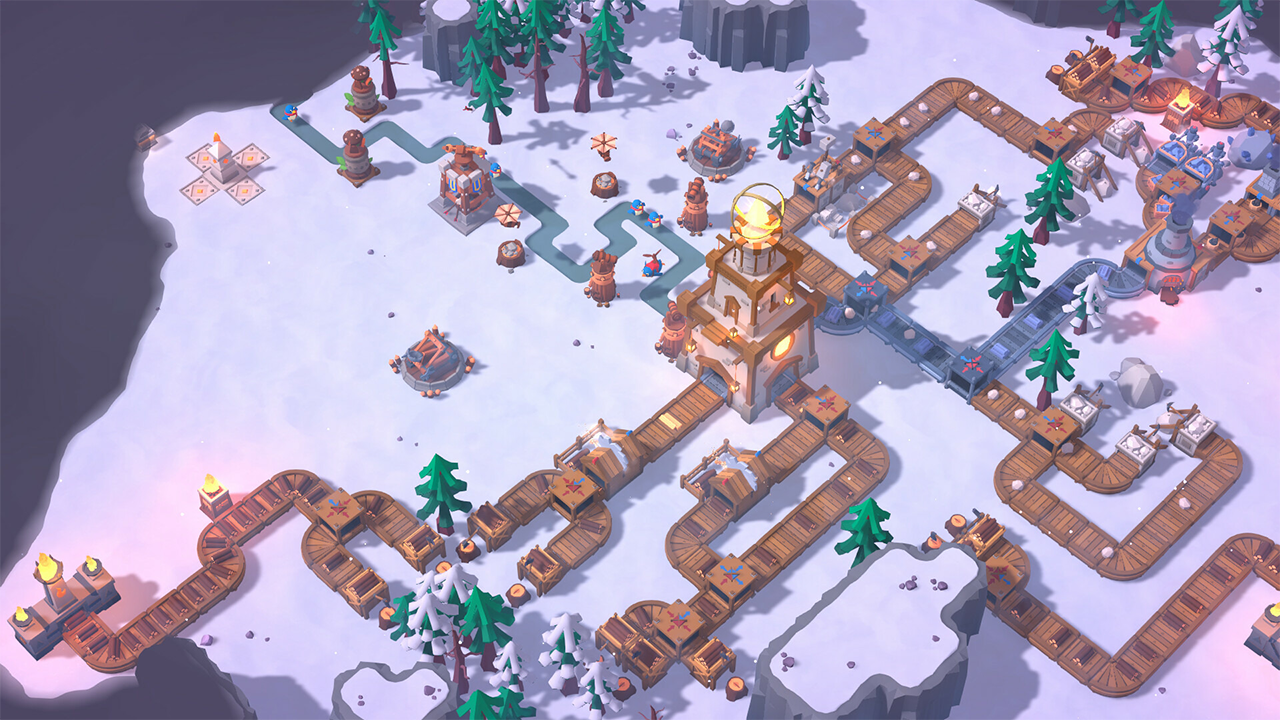
More recently, games like Tower Factory have shown how tower defence mechanics can successfully merge with automation and factory-building concepts. These experiments are important. Without innovation, every tower defence game would eventually start feeling the same.
## Great Tower Defence Games Create Stories
When I think back to my favourite tower defence games, I rarely remember individual towers. I remember moments. Holding off an impossible wave with seconds to spare. Surviving with almost no health remaining. Discovering a strategy that shouldn't have worked but somehow did. Watching a carefully planned defence finally come together. Those are the moments that stay with me. They're the stories players tell themselves after they finish playing. The best tower defence games consistently create those moments.
## Final Thoughts
After all these years, I still find myself returning to tower defence games. Partly because I enjoy strategy. Partly because I enjoy progression. Partly because I enjoy seeing a plan come together. But mostly because great tower defence games constantly challenge players to think.
Whether it's GemCraft, Kingdom Rush, Defence Grid 2, Element TD 2, Colony Defense, Desktop Defender, Rise to Ruins, Tower Factory or one of the many indie games I've discovered over the years, the games that stay with me all share similar qualities.
They're easy to start. They're rewarding to learn. They respect the player's time. They encourage experimentation. And most importantly, they make me want to play one more wave.
After all these years, I still haven't found a cure for that particular problem.
About De Tom Plays
De Tom Plays is a gaming website and YouTube channel focused on discovering hidden gems, indie games, demos, playtests, tower defence games, incremental games and cosy experiences. With more than 45 years of gaming experience, Tom shares gameplay videos, reviews and articles designed to help players find games worth their time.
Learn More About TomRelated Articles
More thoughts, discoveries and articles from De Tom Plays.
Why Tower Defence Games Remain So Popular
Discover why tower defence games continue to thrive and why players keep returning to the genre.
Read Article
All About Tower Defence Games Through The Ages
From browser classics to indie gems, explore the history and evolution of tower defence games through the years.
Read Article